
Lynbrook Previous Residents by Era
Past residents are best traced by separating a question about title from a question about a household. Nassau land records identify recorded parties and the parcel behind a transaction. The verified local directory and newspapers can place a name at an address in a particular period. Maps, permits, and census schedules supply context when a street number alone does not carry across decades. The strongest result is a dated trail that agrees on the same Section, Block, and Lot, rather than a loose collection of matching names.
| Source | Years It Covers | Where Held | What It Shows |
|---|---|---|---|
| Nassau County Clerk land registry | 1899-present; electronic from July 1992 | Online index, Room B-1, liber books, microfilm, and Records Center | Recorded deeds, mortgages, maps, liens, and parties |
| Lynbrook city directory | Verified 1928/29 | NYS Library, 7th-floor Microforms Area | Name and address association from an onsite, non-circulating reel |
| Local newspapers | New Era 1915-27; Nassau Daily Star 1927-37; later Herald runs | Split library, historical, and newspaper repositories | Notices, obituaries, announcements, and move clues, with gaps |
| Maps and permits | 1919 Sanborn; 1906 and 1914 map leads; permit archive dates not located | Library of Congress, Historical Society, and Lynbrook Building Department | Lot, building, street, work, applicant, and date context |
| Federal census | Released schedules under the federal 72-year rule | National Archives and authorized genealogy databases | Household snapshot for its census date |
Begin with the Clerk registry when the question is who held title. Move to the directory reel, newspapers, and census when the goal is who may have been part of a household. A missing entry is an access or coverage problem, not proof that a Lynbrook address was vacant.
Lynbrook Parcel Keys for Past Residents
Use the Nassau Land Records Viewer to gather the current street address, parcel ID, owner or taxpayer, situs address, mailing address, and SBL. SBL means Section, Block, and Lot. It is the parcel key that continues to matter when a historic deed or map uses a description that does not look like the modern address. The viewer accepts house number, street name, town, ZIP, or SBL, and its instructions say to omit directional prefixes and street suffixes when searching.
Keep the mailing address separate from the situs address. A tax bill can go to a trust, estate, corporation, relative, or owner elsewhere. It is a record clue, not proof that a person lived at the parcel. Nassau also warns that the assessment and County Clerk systems can format SBL placeholders differently, so copy the SBL from the official deed or tax record when moving between systems.
Note: Preserve the search date, SBL, and result identifier so a later deed, map, or request can be checked against the same parcel.
Lynbrook Previous Residents in the Deed Chain
The title trail begins with the latest recorded deed, not with a guessed name. The current grantee is the buyer on that deed. Its grantor is the seller whose earlier purchase becomes the next link. At every step, compare the SBL, lot or subdivision reference, and legal description. Street addresses can change; a matching parcel description is the safer test. Search alternate forms too, since recorded parties may appear as initials, spouses, estates, trusts, corporations, or “et al.”
The Nassau County Clerk land-record index is the online starting point for the recorded instrument trail.
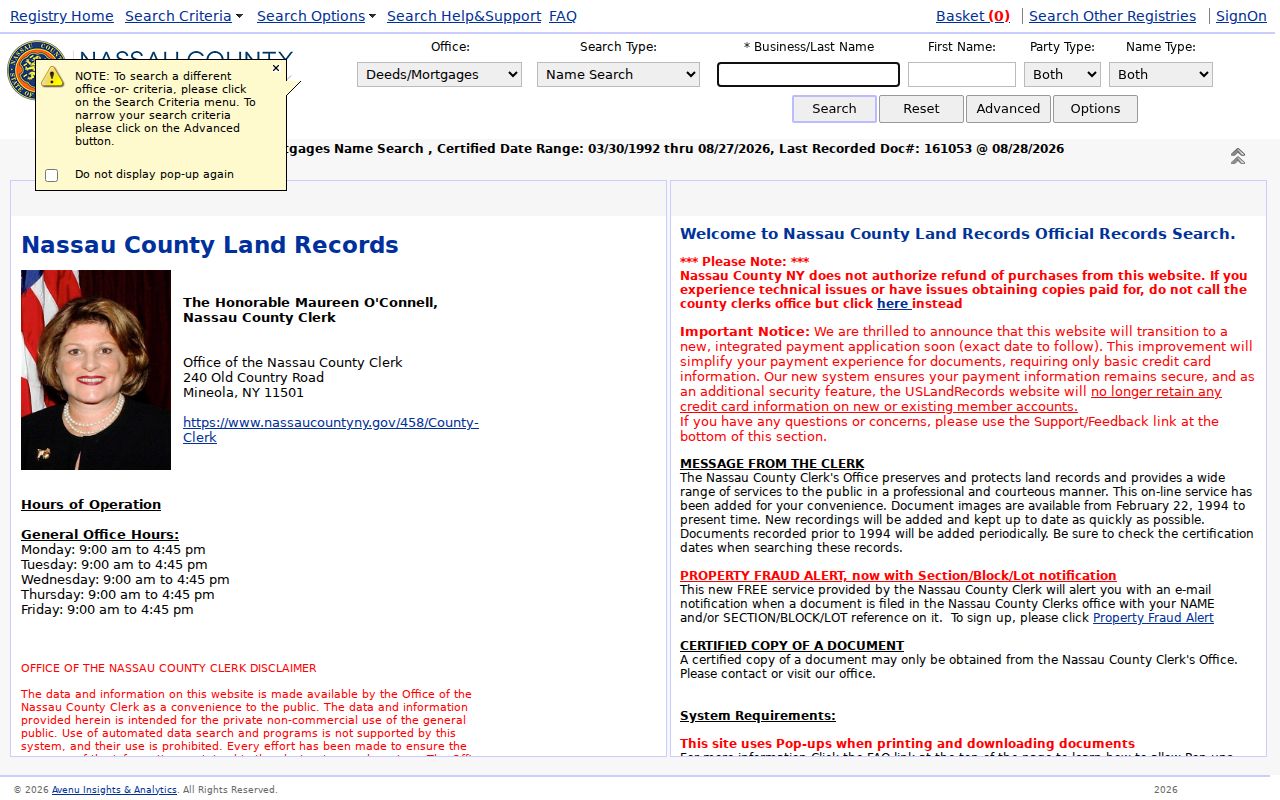
Record the instrument number, party roles, document type, recording date, book and page or image key, and legal description before moving backward. The index establishes that a document was recorded. It does not establish continuous residence at the address.
- Locate the current parcel in the Land Records Viewer and copy the SBL, owner or taxpayer name, situs address, and mailing address exactly.
- Search the current owner as a grantee in the Clerk index, then inspect the purchase deed and capture its parcel description and recording details.
- Use that deed's grantor as the next person to search as a grantee, checking the earlier purchase against the same SBL or legal description.
- Repeat the grantee-to-grantor sequence, recording deed dates in order and retaining all name variations that appear in the index.
- When the online trail stops, take the date range, document type, parties, and SBL to the Clerk's Land Records room, public terminals, liber books, microfilm, microfiche, or Records Center route.
- Grantor
- The party transferring property in a deed, commonly the seller.
- Grantee
- The party receiving property in a deed, commonly the buyer.
- Chain of title
- The ordered series of transfers for one parcel, checked link by link against the same property description.
- Legal description
- The lot, subdivision, map, or SBL description that identifies the parcel more reliably than an old street address.
Lynbrook Past Residents Beyond the Online Index
Nassau's registry begins with the county charter in 1899, but the electronic land-record database begins in July 1992. Older documents were not erased by that change. They remain in index books, property cards, liber books, microfilm, microfiche, county maps, and Records Center retrieval channels. A web result that ends near the electronic cutover is a signal to change access channels, not a final answer about previous residents.
Nassau County Clerk cannot provide property ownership information by telephone or email. Use the online index, a public terminal, the counter, or a written request. Bring the property address or SBL, probable date range, parties, and document type. Ask whether a plain or certified copy is needed, and verify any current charge with the office rather than relying on an older fee schedule.
Lynbrook Previous Residents in Local Collections
The confirmed Lynbrook directory is a 1928/29 city-directory reel at the New York State Library's 7th-floor Microforms Area. It is onsite and non-circulating. The official holding does not publish the publisher, call number, reverse section, or a sample entry online, so those details need onsite verification. For historical household work, the reel is one point in time, not evidence of an unbroken directory run.
The Lynbrook Public Library history page links its local-history material with NY Heritage, historical newspapers, telephone-directory resources, and other research paths.
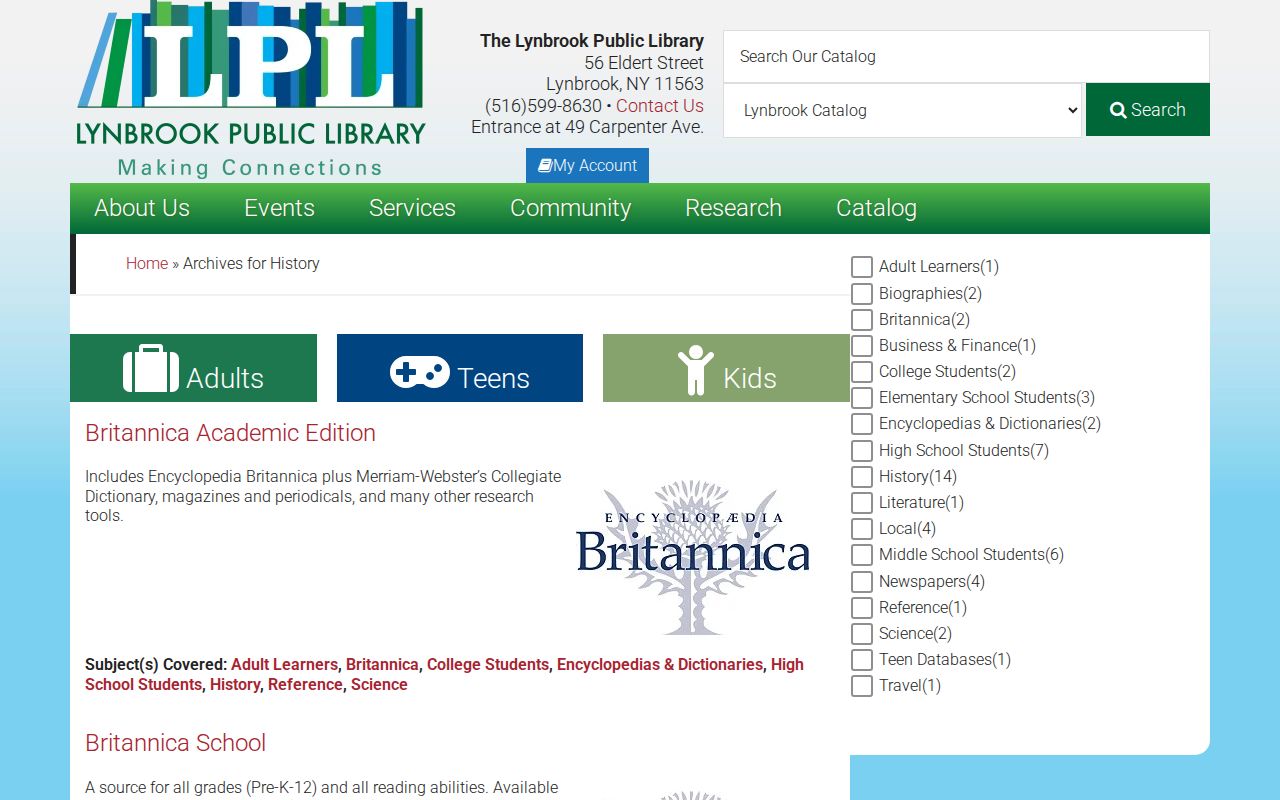
Use a deed, obituary, census, or newspaper date to arrive with an exact surname or address. Search surname-first and initial variants, then save the reel, page, and year beside the matching parcel notes. The historical collections themselves are described in more depth with the Lynbrook city directories.
New Era titles, Nassau Daily Star, and later Lynbrook or Village Herald holdings are split across repositories and formats. Identify the issue date first, then ask the library or Long Island Studies Institute whether the issue is film, paper, or available through NYS Historic Newspapers. OCR errors and name variants are common.
Lynbrook Previous Residents Under Older Names
A past-address search needs more than the current village name. Near Rockaway appears in Hempstead ledgers, and historic labels include Bloomfield, Pearsall's Corners, and Pearsalls before the Lynbrook name took effect on May 1, 1894. Search those variants in newspaper, map, deed, directory, and family-history work. The village incorporation in 1911 is another useful date marker when sorting local civic records.
For a parcel that seems to appear suddenly, consider the 1921 annexation and the Lyndwood Manor subdivision map filed in 1926. Treat that map as a historical lead, not as a modern boundary authority. Pair it with the lot description, older county layers, and Clerk map filing so that a later street address is not mistaken for the original land description.
Note: Record the historic place name exactly as found, then add the modern Lynbrook cross-reference alongside it rather than replacing the older wording.
Lynbrook Past Residents Through Maps and Permits
Maps help date the place before they identify a person. The February 1919 Sanborn volume has nine Lynbrook and East Rockaway sheets. The Historical Society also points to 1906 and 1914 map resources, while the Nassau map viewer includes 1926 and 1950 county layers. Compare a building footprint, road, lot edge, and subdivision label to the current SBL before linking a historical address to a modern one.
The Historical Society of East Rockaway & Lynbrook local-history resources connect researchers to historic maps, newspapers, FamilySearch, and the county property viewer.
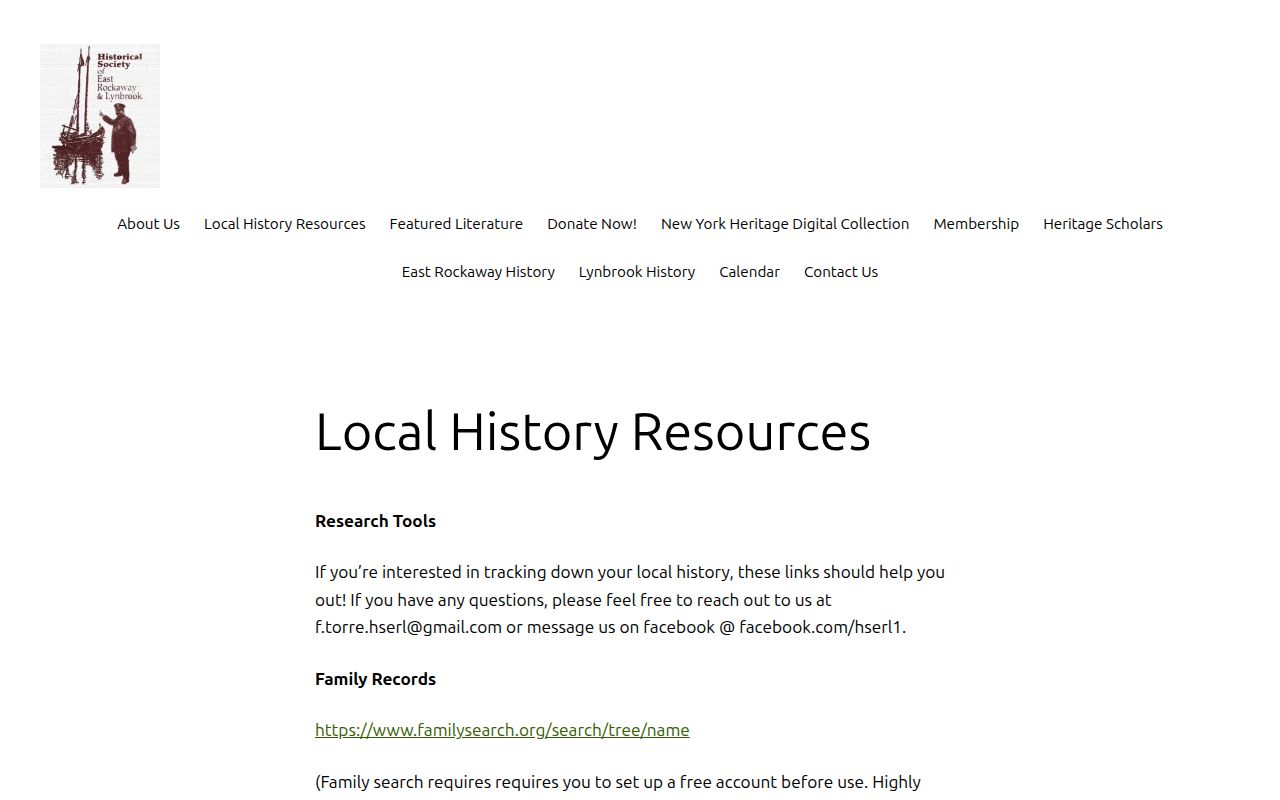
Building permits and certificates can supply a separate date trail. Lynbrook Building Department requests can be made by street address or SBL for an application, inspection, certificate of occupancy or compliance, plan, and disposition fields. The village did not publish an online permit index in the reviewed material. A permit identifies an owner, applicant, contractor, or professional connection at a date, not every past resident.
Lynbrook Households in Census and News
Once the deed chain produces a historic owner name and address, pair the verified 1928/29 directory with the 1930 census, then later released schedules as appropriate. A comparison within roughly two years can help distinguish a move, death, name variation, or directory lag. Directory presence shows an address association at publication time. It does not prove ownership or uninterrupted residence.
- Start with a dated deed, obituary, census entry, or directory reference tied to the parcel or historic street label.
- Search the 1928/29 reel for surname, initials, and address forms, and record the page and year without assuming the printed fields.
- Compare the entry with the nearest released census schedule, noting household members, date, and any address or locality variation.
- Check newspapers for legal notices, announcements, obituaries, or organization references that can explain a move or family change.
- Return to the assessment roll and deed chain to keep owner evidence distinct from household evidence.
Obituaries, cemetery research, and probate can close or extend a family-history trail, but each has its own access limits. The library did not publish a complete obituary index in the sources reviewed. Use newspaper databases, reference staff, funeral-home archives, and cemetery sources with care, and do not treat a modern family detail as material for broad republication.
Lynbrook Previous Residents and Lawful Use
House-history and family-history research should stay narrow. Keep a source URL, custodian, date, search term, and parcel or archive identifier instead of copying sensitive fields into notes. A record that can be inspected is not automatically suitable to republish. Protected physical addresses, full birth dates, account details, and unrelated living family information do not belong in a house-history file.
New York protects Address Confidentiality Program participants and confidential voter registrations. If a result is hidden or a name does not appear, do not try to force confirmation through a protected address. Ask the correct custodian about its access rules, and use the official Nassau Property Fraud Alert for a name or property description when monitoring a possible recording issue.
Lawful use. Lynbrook previous-resident research is appropriate for house history, family history, estate questions, and civic curiosity. Do not use a record trail to track, harass, intimidate, or harm any living person.