
Lynbrook Neighbors by Block
Public sources answer different questions about a block. The map establishes which parcels touch or sit near the target lot. The assessment roll names the owner or taxpayer and may show a mailing address. Clerk instruments document recorded transfers. Historical collections and public civic contacts offer dated context, but none should be used to infer a complete list of people living nearby. A block record is strongest when its parcel, date, and source agree.
| Source | What It Shows About a Block | Access |
|---|---|---|
| Nassau LRV GIS parcel map | Parcel polygons, lots, roads, village boundaries, flood and historic layers | Free map with identify and measurement tools; not a legal survey |
| Assessment roll | Owner or taxpayer, situs and mailing fields, SBL, value, and exemptions | Free Land Records Viewer, parcel by parcel |
| County Clerk deeds and maps | Recorded owners, transfers, legal descriptions, plats, and liens | Electronic records from July 1992; older counter and media route |
| Building records | Address or SBL, applicant, work, inspection, and certificate dates | Written or in-person Lynbrook request; no online index located |
| Directories and local history | Historical names, organizations, programs, photos, and news references | Library, NYS Library microfilm, historical resources, and repositories |
| Civic organizations | Public contact and meeting information for community groups | Village and Nassau public directories; no member roster verified |
Start with a parcel, then treat each later source as a dated confirmation. An owner field and a household are not the same thing. That distinction matters on a compact Lynbrook block where a mailing address can belong to a trust, estate, corporation, relative, or owner who lives elsewhere.
Mapping Lynbrook Neighbor Parcels
The Nassau County Land Records Viewer map is the practical first stop. Search or zoom to the target address, turn on Parcels and Lots, and use Identify on the target feature. Then pan or zoom outward and click the polygons on both sides of the street, at corners, and across any visible street edge. The viewer also supplies road, railroad, park, boundary, aerial, flood, and historical-layer context. It does not have a button that returns a set of named neighbors.
Using the map with its parcel layers keeps an immediate Lynbrook neighbor search tied to actual parcel geometry.
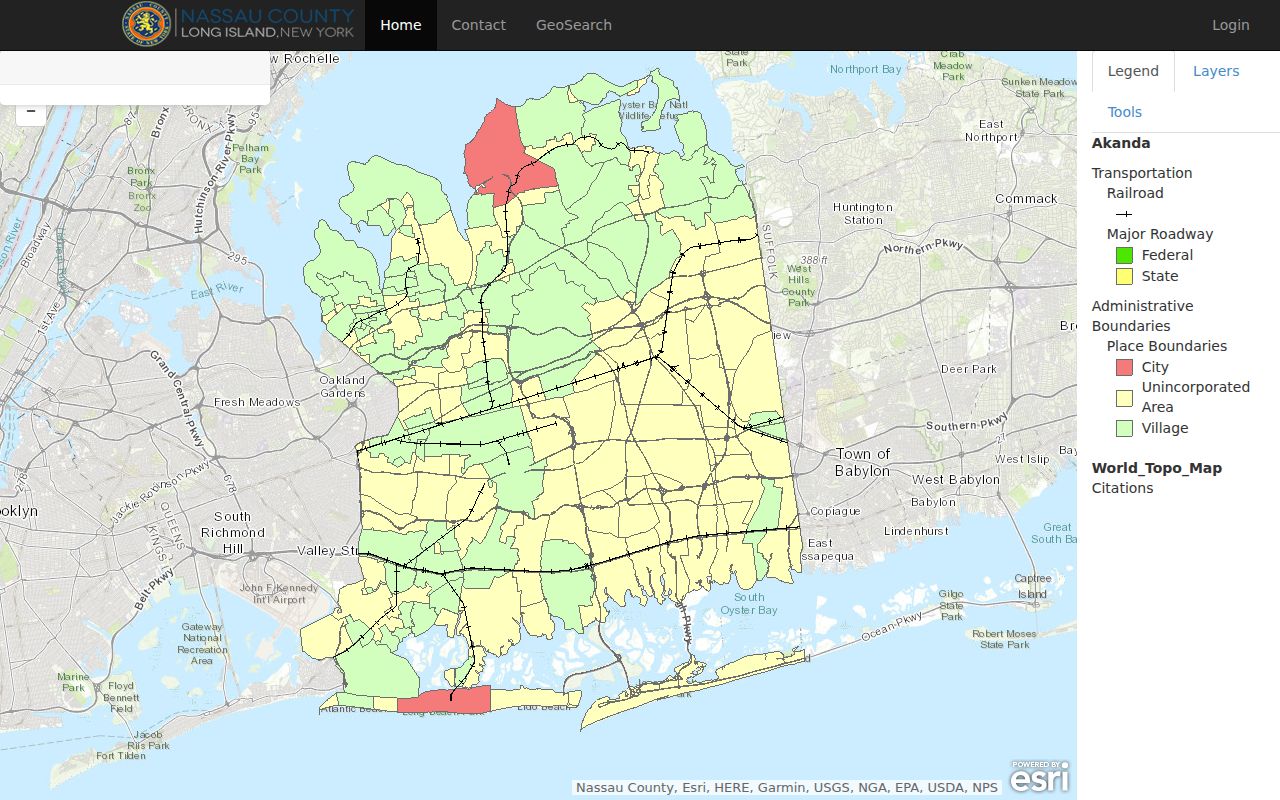
For each nearby polygon, capture PARCEL, PARCEL_ADDRESS, PARID, and ROLL_YEAR, then follow the parcel into the assessment record. A parcel is a defined piece of land. Adjacency on a map is not always next-door household adjacency, since a road right-of-way, railroad, park, large lot, or corner can intervene.
- Search the address in the map or Land Records Viewer and save the exact parcel address and SBL.
- Use the Parcels and Lots layers with Identify to record the target and nearby polygon identifiers.
- Open each nearby parcel in the assessment workflow and distinguish its situs address from its owner or taxpayer mailing address.
- Use the Clerk deed index only when a recorded transfer or legal description needs confirmation for that specific parcel.
- For a longer named-street record trail, use the Lynbrook street directory rather than treating a block browse as a full street search.
Lynbrook Neighbors and Owner Fields
The assessment result can show the owner or taxpayer, mailing address, situs or physical parcel address, SBL, tax class, value, exemptions, property characteristics, taxes, and sales information. The map's parcel layer itself does not promise an owner name. Use its parcel address or identifier to reach the assessment record, then use the Clerk record for legal ownership verification when needed.
Situs means the physical location of the parcel. A mailing address is where tax information can be sent. A deed's record-and-return address is an instruction connected to a transaction. None of those fields is a substitute for a current household list. Preserve the indexed name exactly, especially when it is a trust, estate, corporation, or a party using initials.
- SBL
- Section, Block, and Lot, the Nassau parcel key used to compare records across map, assessment, and deed sources.
- Situs address
- The physical address of the parcel rather than the address used for tax mail.
- Legal description
- The lot, map, subdivision, or SBL description that connects a deed to the correct land.
Lynbrook Neighbors Under Historic Layers
When a block's shape or street name seems unfamiliar, turn on the Nassau County 1926 or 1950 map layers and compare them with current parcels. The February 1919 Sanborn volume has nine Lynbrook and East Rockaway sheets, while the Historical Society points to 1906 and 1914 map resources. These materials can show older roads, lots, buildings, and subdivision context. They do not name every household.
The 1894 shift to the Lynbrook name matters in older material. Search Bloomfield, Pearsall's Corners, Pearsalls, and Near Rockaway as well as Lynbrook when following an early street or family reference. For an address that appears after the 1921 annexation or the 1926 Lyndwood Manor subdivision filing, use the legal description and map trail rather than assuming today's boundary names were in use.
Note: Compare one consistent feature, such as a lot edge, cross street, or parcel key, before carrying a historic map observation into a current block record.
Lynbrook Neighbors and Voter Records
New York's public voter lookup is an individualized status and poll-site tool. It asks for county, last name, first name, date of birth, address information, and ZIP. It does not provide a public street-browse or block-neighbor search. A no-match can reflect a different legal name or address, an inactive status, or a protected record. It is not proof that a nearby person is unregistered or absent.
A voter-data request has a separate legal channel. Election Law § 3-103(5) limits statewide-list information to elections purposes, and confidential registrations under Election Law § 5-508 remain separate from ordinary inspection. Keep the public map and assessment approach distinct from voter material. A private address or protected registration should never be reconstructed from separate fragments of information.
The research also separates residence and mailing fields in the voter-file layout. That explains why a voter residence field, an assessment mailing address, and a deed return address should not be conflated.
Lynbrook Neighborhood Contacts
Public community contacts can add civic context to a block without becoming a way to assemble private membership lists. The Village clubs and organizations listing and the Nassau civic directory identify groups such as the Lynbrook Civic Association, Chamber of Commerce, and Historical Society of East Rockaway & Lynbrook. Ask only for public meeting, contact, or program information, and confirm a listing before relying on it because organizational details can change.
Lynbrook Civic Association
Public directory contact: P.O. Box 261, Lynbrook, NY 11563, (516) 599-2022. This is a public contact listing, not a member directory.
Lynbrook Chamber of Commerce
Village listing contact: P.O. Box 624, Lynbrook, NY 11563, (516) 593-3436. Use it for current public organization information.
Historical Society
Historical Society of East Rockaway & Lynbrook public contact: (516) 887-9094. Ask about local-history resources, maps, or public programs.
The Nassau civic-organization directory provides the umbrella public listing for the Lynbrook Civic Association.
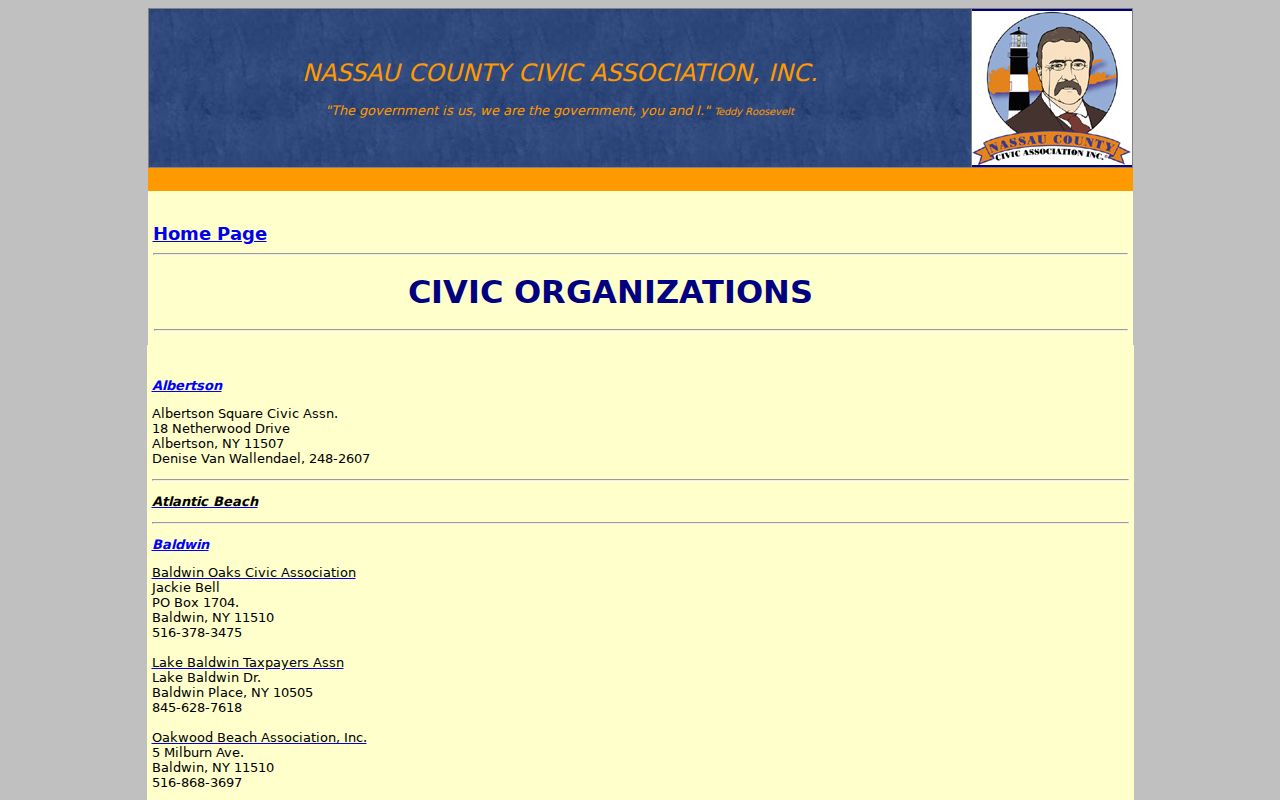
The directory supports a contact or meeting search, not an assertion about who belongs to a group or where a member lives. The village list also names service, veterans, faith, sports, and civic organizations, but no complete member rosters were found.
Lynbrook Neighbors in Community History
A local institution can connect a block to a dated public event without identifying a private household. Lynbrook Public Library's local-history pages point to New York Heritage photographs and audio, historic newspapers, StoryCorps interviews, scrapbooks, programs, and the 1928/29 directory reel at the State Library. Captions, program notes, and newspaper items can offer useful names and organization context, but they are not a current neighborhood roll.
The Historical Society local-history resources link to maps, state newspapers, FamilySearch, and the county property viewer.
Search a title and date before requesting a newspaper issue or collection item. The local archive chain has gaps and varied formats. A reference desk can help identify whether an item is available as film, paper, a licensed database result, or a digital collection record.
Official Records for Lynbrook Neighbors
Official sources and commercial neighbor tools serve different purposes. The official chain supplies a custodian, record date, parcel link, and defined limits. Commercial tools may combine address, ownership, and marketing data, but their matching logic and update dates are not a substitute for a county or village record. Use the official source to check a claim and keep a clear distinction between public inspection and unnecessary republication.
| Official record route | Commercial neighbor tools |
|---|---|
| Links a parcel to the Nassau map, assessment roll, and recorded deed history. | May merge address and marketing data without showing the underlying custodian or parcel basis. |
| Shows record scope, date, access channel, and legal limits. | Can be stale or mismatched and may not explain how a name was connected to an address. |
| Supports a narrow parcel-by-parcel check and a correction request to the custodian. | Does not replace checking an official record or honoring privacy boundaries. |
Use the map, assessment record, and deed index for the factual starting point. If a record appears wrong, preserve the date and identifier and contact the agency that maintains it. Removing a commercial listing would not alter the underlying public record.
Lynbrook Neighbor Privacy Limits
Several parts of a block remain private: non-owner household members, utility and delivery customers, school records, private club membership, protected voter registrations, Address Confidentiality Program locations, and nonpublic law-enforcement information. The current owner field is time-stamped, and an assessment mailing address can be a personal location clue. Neither should be turned into a broad profile of people on a block.
Keep notes to the source URL, custodian, date, search terms, and stable result identifier such as an SBL, parcel number, or archive call number. Do not copy full birth dates, account data, hidden physical addresses, or unrelated family information. A protected result should be left protected. For a deed-fraud concern, use the official Nassau Clerk and Property Fraud Alert channels rather than a mail solicitation.
Lawful use. Lynbrook neighbor research is for civic curiosity, reconnecting through public contacts, and understanding the block. Do not use public records to watch, harass, intimidate, or harm anyone.