
Lynbrook Directory Collections
The New York State Library provides the strongest verified Lynbrook directory holding: a 1928/29 entry on film. That confirmation is useful precisely because it is narrow. The library's list does not promise a yearly run, a publisher, an entry image, a reel number, or a shelf call number in its public text. Treat the film as the local starting point, then use the other collections as dated companions rather than filling a gap with an assumed series.
| Collection | Years | Where held | Access |
|---|---|---|---|
| Lynbrook directory film | 1928/29 verified | New York State Library, 7th-floor Microforms Area | Onsite, non-circulating film; local name and address associations |
| Possible Lynbrook directory references | 1923 and 1928 are secondary-catalog leads | Referenced U.S. directory materials | Confirm with a librarian before treating them as a local run |
| New York telephone-directory history | Historic metropolitan materials | Lynbrook Public Library history databases | Address context only; not a verified complete Lynbrook run |
| New Era and related local newspapers | 1915 through later local title sequences | Split repositories and local holdings | Film, microfilm, paper, licensed databases, or digital access varies |
| NY Heritage Lynbrook collections | Mainly twentieth-century items | New York Heritage | Item-level photos, audio, programs, scrapbooks, and contextual metadata |
The New York State Library city-directory holdings capture identifies the physical Lynbrook film route.
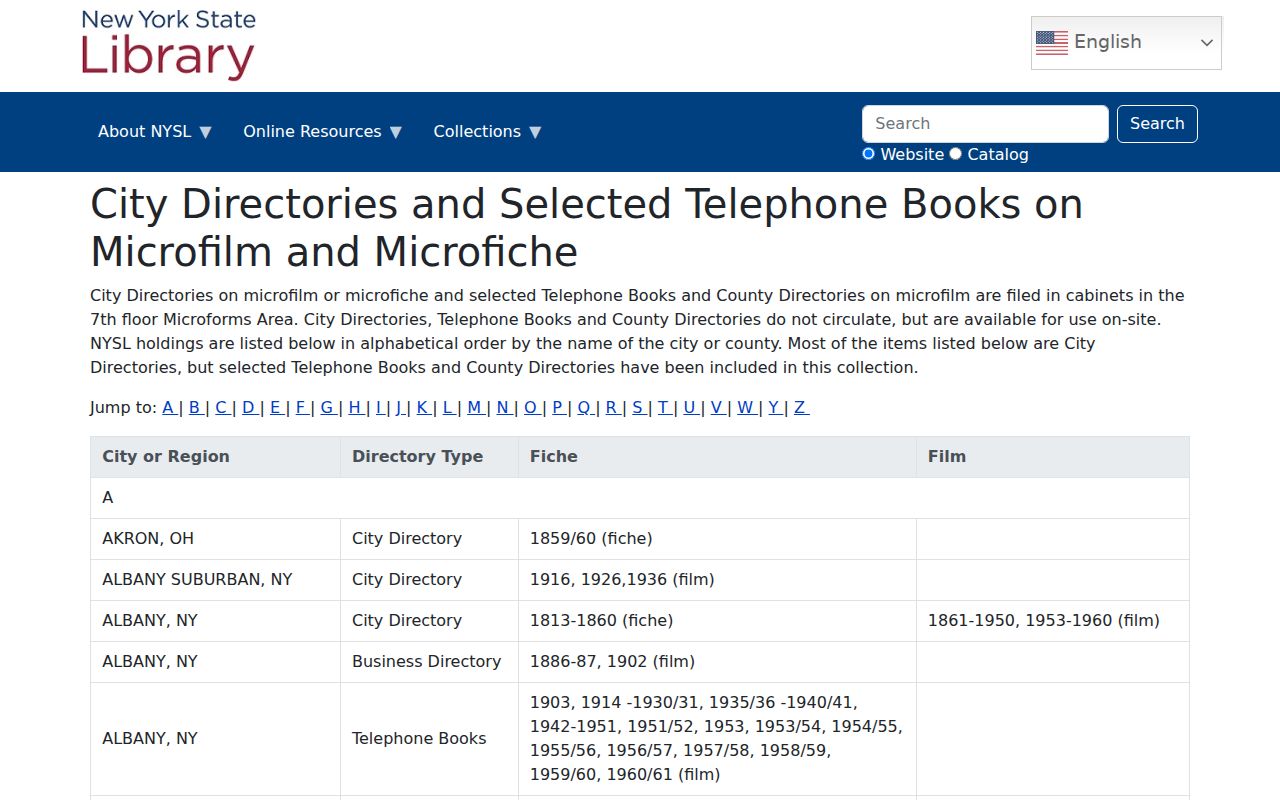
Because the catalog does not expose an entry page, the publisher, exact field order, and presence of an address-ordered section all need onsite confirmation before being described as facts.
Lynbrook Directory Reel
The State Library keeps directories, telephone books, and county directories in its 7th-floor Microforms Area. The materials do not circulate. That means a Lynbrook researcher should contact the reference desk, ask for the 1928/29 film, and record the volume, reel or call information supplied at the visit. A photograph or transcription should retain the year and page or frame so another researcher can check the same item.
The verified notation appears to represent one combined 1928/29 volume or reel, not proof that each year had a separate local directory. Secondary catalog references to 1923 and 1928 may be useful leads, but the official local shelf page only confirms 1928/29. The honest next step is a reference-desk check, not a fabricated publisher name or a claimed complete run.
Note: Record the access date and exact microfilm identifier before relying on a name or address association from the Lynbrook film.
Lynbrook Library Directory Access
Lynbrook Public Library at 56 Eldert Street is the local bridge between the state-held film and other family-history sources. Its visitor information says public computers are available to people with any Nassau library card or a visitor pass. The library's genealogy page offers HeritageQuest Online, with American primary sources, local and family histories, and finding aids reaching back to the 1700s. Database and card conditions can change, so confirm access before a visit.
The library history resources also point to Local History of Lynbrook, New York Heritage, historic New York City telephone directories, New York Times Historical, and Newsday Historical. Telephone materials offer context, not a confirmed full Lynbrook directory shelf. News databases can locate announcements, obituaries, advertisements, and neighborhood events that help test a directory date or address. Ask the reference desk for the named collection and year instead of requesting a broad list of people.
The Lynbrook Public Library genealogy page captures the HeritageQuest access route.
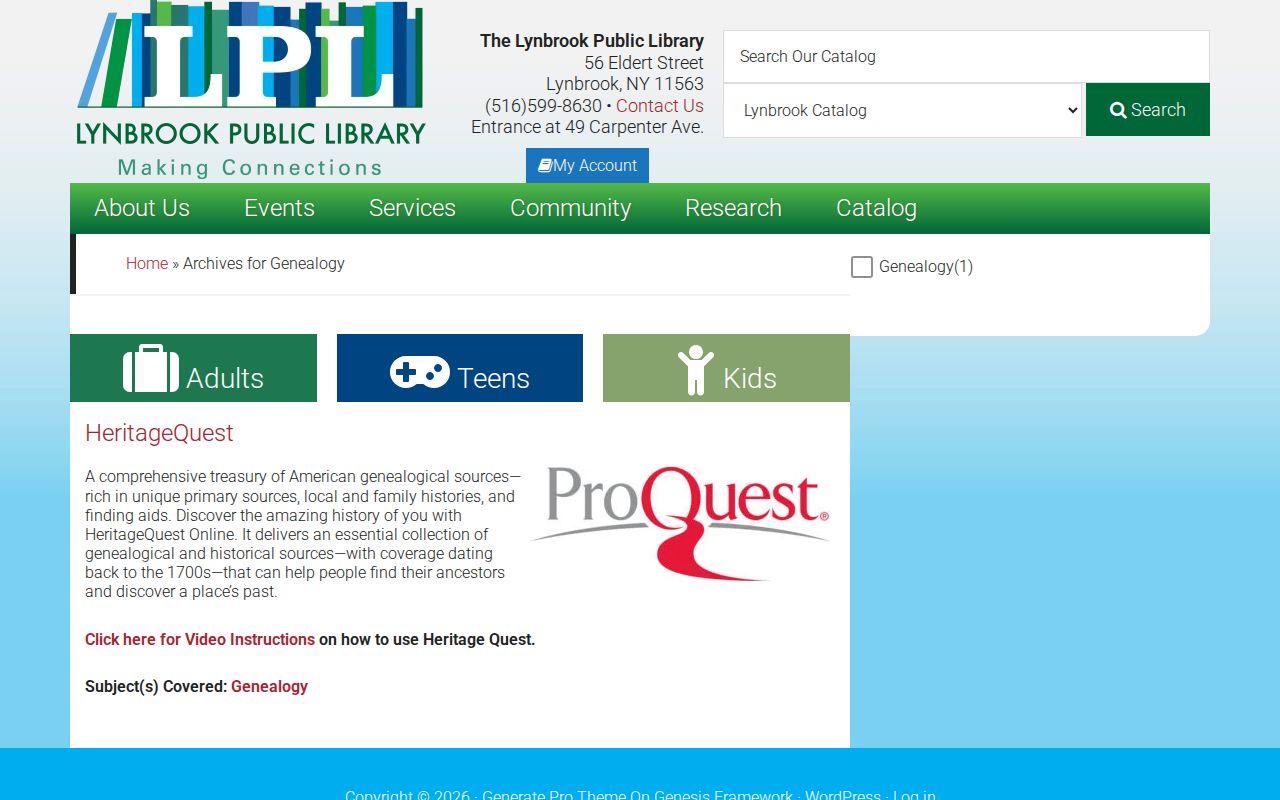
Library databases extend the research trail, but they do not turn the verified 1928/29 film into a continuous online directory series.
Read a Lynbrook Directory
No official online image of a 1928/29 Lynbrook entry was located. The exact abbreviation key, field order, address formatting, and address-to-name section therefore need inspection on the film. A useful reading sheet can still be prepared in advance, but every field should be marked as observed only after the reel is opened. This preserves the distinction between a common directory convention and a verified local entry.
| Name form | Record the surname, given name, initials, and punctuation exactly as printed; compare O' and Mc variants when needed. |
|---|---|
| Street association | Copy the address as printed and keep the volume year and page or frame with it. |
| Household notation | Record a spouse, widow, or other household notation only if the Lynbrook entry shows it. |
| Business classification | Preserve any printed classification or organization reference without assuming it appears in every entry. |
| Status symbol | Check the local abbreviation key before interpreting any ownership-status or boarding symbol. |
- Criss-cross directory
- An address-ordered directory section. No Lynbrook-specific reverse run has been verified in the official pages, so check the 1928/29 film rather than assuming one exists.
- Householder index
- An index organized around a household or address association. Its form and presence must be confirmed in the local volume.
- Abbreviation key
- The printed explanation for symbols and short forms. Photograph or transcribe the local key before interpreting an entry.
One dated entry can support an address association at publication time. It does not, by itself, establish ownership, continuous residence, or a complete household.
Note: Keep the page or frame with every transcription, because the local abbreviation key and entry sequence require onsite verification.
Lynbrook Directory Field Limits
The small but important limits of the verified Lynbrook directory protect against false certainty. The public State Library page does not identify a publisher for the 1928/29 holding. It also does not show a reel number, sample entry image, annual coverage, or a reverse section. The library's reviewed web pages do not publish a complete printed-directory, telephone-book, or obituary-binder inventory. Those are open questions to ask a librarian, not blanks to fill with generic claims.
Directory evidence belongs beside a source date. A person can be absent because the volume did not cover the relevant year, the entry was indexed under initials or another spelling, the person moved, or the source has a gap. A newspaper, map, assessment record, deed, or census release can clarify a conflict. For a modern address-keyed trail, use the Lynbrook street address records rather than forcing historical film to answer a current property question.
Lynbrook Newspaper Directory Trail
Newspapers help fill the space around the 1928/29 film. The State Library catalog lists New Era as a Lynbrook title in several sequences: 1915-16, 1916-20 under New era and Malverne news, 1921-25, and 1925-27. Nassau Daily Star begins in a 1927-33 sequence. Later local routes include Lynbrook USA News in 1985, Lynbrook Herald in 1994-96, and Village Herald from 1996 onward. Repository holdings are split, so identify the title and date before requesting an issue.
The New York State Library newspaper holdings and the Historical Society's historic-newspaper link are practical starting points. Search names, addresses, organizations, obituaries, legal notices, and variant place names. OCR can misread surnames and street labels. A newspaper item is dated context, not a substitute for the directory film, and its format may be film, microfilm, paper, licensed access, or a digital item depending on the repository.
Note: Ask for the title, issue date, and holding format first, because a local newspaper run can be split across repositories.
Lynbrook Historical Name Keys
Lynbrook's name history changes the search vocabulary. Local sources use Bloomfield, Pearsall's Corners, Pearsalls, and Near Rockaway for earlier material. Lynbrook became effective in 1894, and the village incorporated in 1911. A directory, map, obituary, or newspaper search that uses only the modern name can miss a relevant older item. Retain the original place wording in notes, then add a modern reference separately when it can be verified.
The Historical Society's local-history resources point to FamilySearch, state historic newspapers, My Nassau Property, and historic maps. Those routes are especially useful when an old address needs a place-name bridge. They do not verify a full address directory or a private household list. Use them to locate a period source and compare it with maps, film, and recorded land evidence.
The captured Historical Society of East Rockaway and Lynbrook resource page shows the local-history routes used to test older place names.
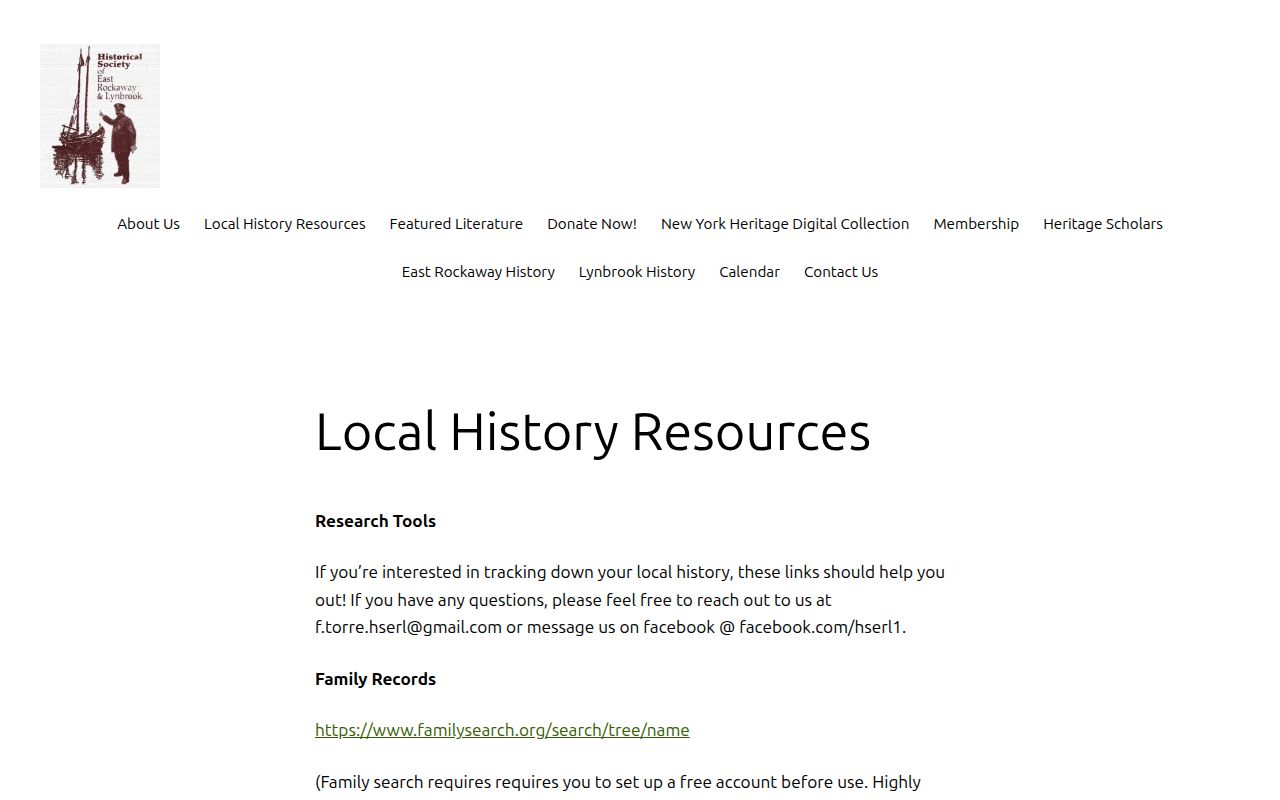
Use the society's map and newspaper links as corroborating channels while keeping the exact year and original locality label attached to each result.
Trace Lynbrook Directories
A household trail should move in time, not jump from one undated name to a conclusion. Start with a known surname or address from a deed, census, obituary, or newspaper. Search surname-first and first-name or initial variants. Then record every address and printed association exactly as it appears. Pair the 1928/29 directory date with the 1930 federal census, and use later released census schedules as they become applicable. The close timing helps distinguish a move, a name change, a death, or directory lag.
- Locate the first verified surname or address association in the 1928/29 Lynbrook film and save its year and page or frame.
- Search the same and variant names in local newspaper titles, noting issue date, repository, and the exact place name used.
- Compare the result with the nearest released federal census and keep differences as questions until another dated source resolves them.
- Check maps and the modern parcel trail when the street label or lot history changes, preserving both old and modern references.
- Use New York Heritage captions, programs, audio, or local history materials for context, then distinguish that context from proof of an address.
A disappearance from a directory is not a final answer. It can reflect a move, death, index variation, publication gap, or coverage decision. Use a new source only to answer the specific uncertainty it can document.
Lynbrook Maps and Collections
Maps help a directory address make sense. The Library of Congress holds a February 1919 Sanborn volume with nine Lynbrook and East Rockaway sheets. The Historical Society links 1906 and 1914 historic maps, while Nassau's map viewer includes 1926 and 1950 county layers. These sources can show a street, lot, or building context, but none is an occupant or title record. Compare a printed directory address with the map date before assuming the street had the same layout.
New York Heritage brings together local photographs, audio recordings, the Leo H. Bock Collection, movie-theatre programs from 1932-37, the Audrey Wood Collection, photo albums and scrapbooks, programs, and Lynbrook Camera Club material from 1947-57. Item captions and metadata can identify people, groups, donors, or local events. They are useful context collections, not a complete name index. The library building itself adds to that history: it opened as Lynbrook Free Library in 1913, took its present name in 1916, preserved its 1929 building during a 1992 expansion, and received State and National Register recognition in 2025.
Note: Use each map or Heritage item with its own date, since a caption or building footprint does not establish a household at the address.
Lynbrook Directory Comparisons
Digitized NYPL metropolitan directory materials can help with regional context, but they should not be presented as a Lynbrook run. The collection spans New York materials from 1786 to 1934. It is a comparison source. Lynbrook's verified local anchor remains the State Library's onsite 1928/29 film, and a telephone or metropolitan collection may not cover a Lynbrook address at all.
The captured New York Public Library digitized city-directory collection demonstrates the regional digital route.
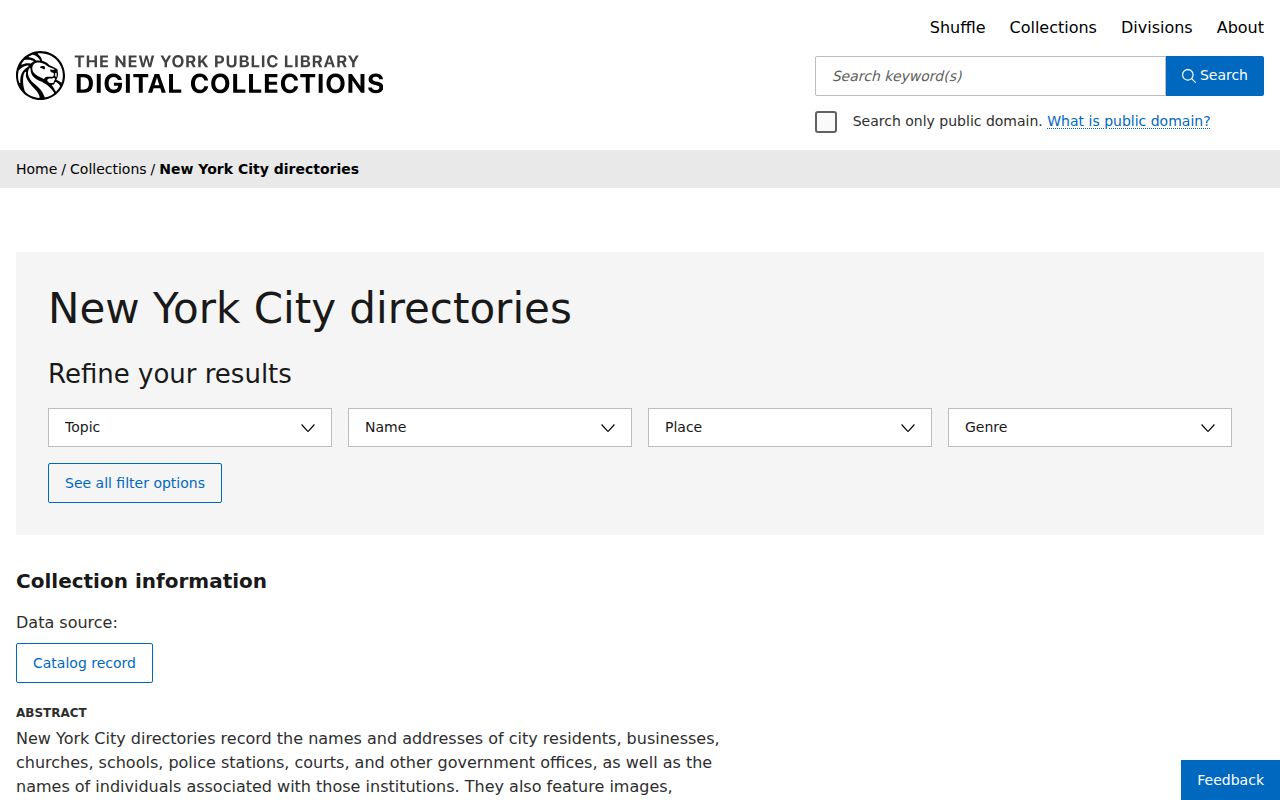
Use an NYPL hit to test a broader place or surname, then return to the Lynbrook film, local papers, or maps for a locality-specific conclusion.
Lynbrook Directory Timeline
The known collection history is short enough to state plainly. It does not support a publisher-change narrative or a claim about the last printed Lynbrook directory. The timeline below marks confirmed access points and local context, while leaving the unverified shelf gaps visible.
| 1894 | Lynbrook became the effective place name, making Pearsalls and related labels key search variants for earlier records. |
|---|---|
| 1913 and 1916 | The local library opened as Lynbrook Free Library and was renamed Lynbrook Public Library. |
| 1928/29 | The New York State Library confirms a Lynbrook directory on onsite, non-circulating film. |
| 1992 | The library expansion preserved the 1929 building, which remains tied to its local-history collections. |
| 2025 | State and National Register recognition added a documented preservation milestone for the library building. |
The collections route is therefore clear even where the annual shelf is not: contact the State Library for the film, use Lynbrook Public Library for local databases and staff help, consult the Historical Society for maps and newspapers, and retain the original source date with every result.